

(Updated 10-09-25)
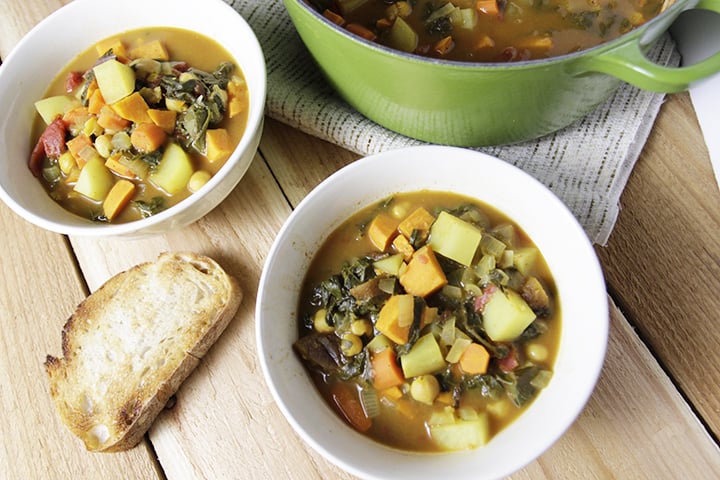
There’s something so comforting about a steaming bowl of stew on a cool evening — cozy spices, hearty vegetables, and an enticing aroma. This Moroccan Stew with Kale is one of my favorite cold-weather staples. It captures the essence of Moroccan spice traditions (cinnamon, cumin, turmeric), while staying firmly whole food and plant-powered.
In fact, I enjoy this cuisine so much I put together a Plant-Based Moroccan Holiday Menu that features one of my other Moroccan recipes, Moroccan Chickpea Vegetable Tagine. So, if you’re wondering what to serve with Moroccan stew, this is a great place to start!
This stew is more than just comforting — it’s a nutrient-dense powerhouse, offering fiber, plant-protein, vitamins, minerals, and a rainbow of phytonutrients in every spoonful. Over the years, I’ve turned this into a go-to for meal prep, leftover lunches, and even a surprising breakfast when extra time is scarce.
In this post, I’ll walk you through the recipe, share the health benefits behind each ingredient, suggest fun variations, and give you tips for making it your own.
Why This Stew Works So Well
1. Flavor layering & aromatic spices
The combination of spices—cinnamon, cumin, ginger, cloves, nutmeg, turmeric, and curry powder—creates both warmth and complexity. Toasting spices in the onion base helps release their essential oils and deepen flavor. The use of Ceylon cinnamon is recommended (versus cassia), as the latter contains coumarin, which at higher doses may burden the liver.
2. Sweet-salty contrast using apricots
The dried apricots add a subtle sweetness that contrasts nicely with the earthiness of the legumes and the heartiness of the potatoes. That small, sweet element helps balance the savory flavors.
3. Texture and volume
By combining starchy roots (potatoes, sweet potatoes), legumes (chickpeas, lentils), and greens (kale), you get a mix of creamy, firm, and tender textures. The kale adds a green punch, both visually and texturally.
And, if you want to learn more about the benefits of greens, take a look at my article series Get Your Leafy Greens On, Part 1 and Part 2.
4. Scalable and versatile
The recipe makes a large amount, which is perfect for meal prep or leftovers. You can easily double, halve, or adapt ingredient ratios based on what you have on hand.

Health Benefits & Nutrition Insights
Here’s how this stew supports health on multiple levels — perfect to highlight for your readers:
✅ High in fiber & gut-supporting
With ~14–15 g fiber per serving, this dish supports digestive regularity, gut health, and the gut microbiome. The mix of soluble and insoluble fibers from legumes, root vegetables, and kale fosters beneficial gut bacteria and helps digestion.
✅ Plant-based protein
Between the lentils, chickpeas, and greens, you get ~17–18 g of protein per serving — a solid plant-based dose, especially when paired with whole grains or on its own as a satisfying meal.
✅ Rich in vitamins, minerals & phytonutrients
-
Vitamin A & beta-carotene from carrots, sweet potatoes, kale
-
Vitamin C boosts immunity and is in good supply
-
Iron & calcium from legumes + greens — while non-heme iron is less bioavailable, combining it with vitamin C (present in the stew) helps boost absorption
-
Antioxidants & anti-inflammatory compounds: turmeric, ginger, cinnamon, garlic, kale, tomatoes — all bring anti-inflammatory and antioxidant benefits
✅ Low in fat & saturated fat
At ~1.5 grams of fat, this is a low-fat, whole-food–oriented recipe. It’s cholesterol-free, vegan, and light on added oils or saturated fat.
✅ Blood sugar stability
Because of its fiber and the complexity of carbohydrates, the stew provides slower-release energy, which helps modulate blood sugar spikes (vs refined carbohydrate meals).
This Moroccan stew recipe makes a large amount, but it’s great to eat as an afternoon snack the next day or even for breakfast.
Savory Fall Dinner Ideas:
- Vegetarian Bean Chili
- Stuffed Poblano Peppers With Pineapple Salsa
- Sweet Potato Veggie Lasagna
- Moroccan Chickpea Vegetable Tagine
- Beefless Stew

Tips, Variations & Serving Ideas
-
Grain pairing: Serve over quinoa, millet, brown rice, or farro to boost whole-grain carbs and additional protein.
-
Swap greens: If kale isn’t available, you can use collard greens, Swiss chard, spinach (add toward the end), or bok choy.
-
Legume swaps: Use black beans, cannellini beans, or split peas if you prefer.
-
Add more veggies: Zucchini, eggplant, bell peppers, or mushrooms can be added mid-cook (so they don’t disintegrate).
-
Make it spicier: Add a bit of harissa, cayenne, or crushed red pepper flakes to ramp up heat.
-
Lighter vs thicker: For a soup-like texture, increase broth/water. To thicken, reduce the liquid or mash a few potatoes inside the stew.
-
Citrus finish: A squeeze of fresh lemon or lime juice just before serving brightens flavors and helps with iron absorption.
-
Garnishes: Fresh parsley, cilantro, toasted almonds or pumpkin seeds, or a dollop of plant-based yogurt or tahini drizzle.
-
Batch cooking & freezing: This stew freezes well. Portion into freezer-safe containers for quick meals.
-
Make it seasonal: Swap root vegetables depending on season—use turnips, parsnips, winter squash, etc.
One of my favorite things about soups and stews is how easy they are to prepare. With a stocked pantry, you’ll have what you need to put together a delicious meal.
If you’re just starting out on a plant-based diet, knowing some pantry staples and tips is a great way to ensure you stick to your diet plan. You will find this vegetarian Moroccan stew recipe a perfect addition to a plant-based weekly meal plan.
I have some tips and resources that can help you do just that! Read my articles:
- 12 Must-Have Kitchen Tools for Plant-Based Cooking
- 7 Tips and Timesavers for Plant-Based Cooking in a Flash
- How to Stock Your Plant-Based Pantry
I’d love to hear your feedback in the comments below for this Moroccan Stew with Kale! If you have a photo, post it on my Facebook page, tag me using the hashtag #plantbasedcooking

Moroccan Stew with Kale
Equipment
- Measuring Cups and Spoons
Ingredients
- 1/4 cup homemade vegetable broth or water for sauteing
- 2 tsp Ceylon cinnamon*
- 2 tsp ground cumin
- 1 tsp ground ginger
- 1/2 tsp ground cloves
- 1/2 tsp ground nutmeg
- 1/2 tsp ground turmeric
- 1/2 tsp curry powder
- 1 tsp salt optional
- 1 large sweet onion chopped
- 2 cups rough chopped kale
- 4 cups (1, 32-oz box) homemade vegetable broth or more, (or 4 cups homemade)
- 1 14.5 oz can diced tomatoes undrained
- 4 large carrots chopped
- 2 medium sweet potatoes peeled and chopped
- 3 large potatoes peeled and chopped I used yukon golds
- 1 (15-oz.) can garbanzo beans drained
- 1/2 cup dried apricots chopped
- 1 cup dried lentils rinsed
- salt and black pepper to taste

Instructions
- Cook onion in a large pot on medium high heat in ¼ cup of water or vegetable broth until soft and just beginning to brown, 5 to 10 minutes. Stir in the spices and cook until they are fragrant.
- Pour the vegetable broth into the pot. Add more if you want it to be more soup-like.
- Stir in the tomatoes, carrots, sweet potatoes, potatoes, garbanzo beans, apricots, and lentils. Bring to a boil and reduce heat to low.
- Stir in the shredded kale and simmer stew for 30 minutes until the vegetables and lentils are cooked and tender.
- Season with salt and black pepper.
- Simmer until stew has thickened, about 5 minutes.
Notes
Nutrition
Leave a Comment and Star Rating ⭐️⭐️⭐️⭐️⭐️
I appreciate your feedback! Please consider rating the recipe along with your comment—it helps me and fellow readers. Feel free to share any substitutions, results, or tips. Kind, constructive comments only. Your email won’t be published.


I made this meal for my mom and I. Makes a large amount but delicious. I will make this recipe again but halfing it. Thank you
Hey Jeannette, I’m so glad you and your mom enjoyed the recipe. It does make quite a bit. Maybe you’ll enjoy it leftover. I love it for lunch for the next few days. Thanks for the feedback 💕